
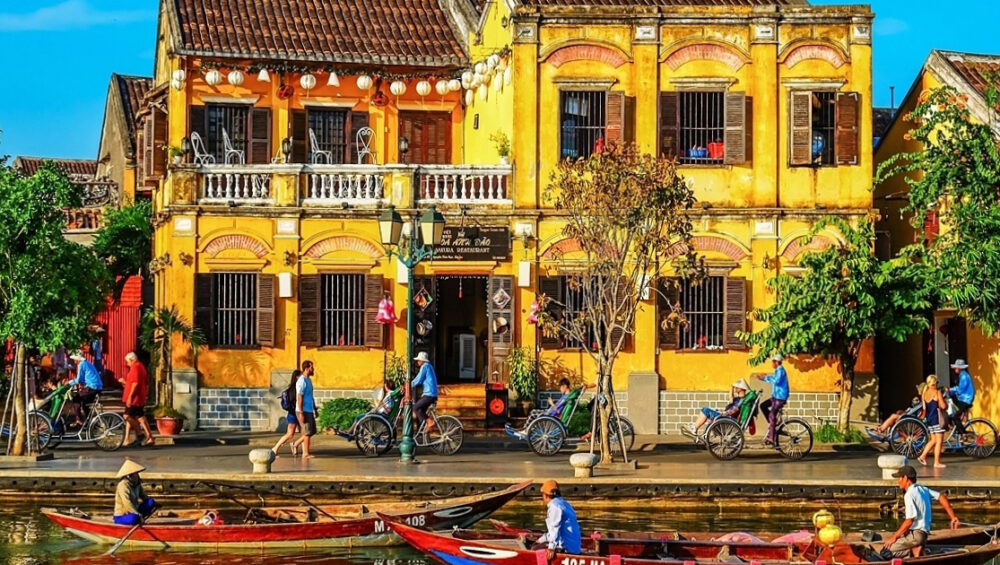
Travel experiences in Hoi An shared by previous visitors are the ultimate guide for discovering the timeless beauty of Hoi An Vietnam, from the charming ancient town and traditional craft villages to the rich local cuisine and peaceful riverside life. Before starting your journey to this UNESCO heritage destination, let Vietnam Asia Travel DMC.
Introduction to Hoi An Vietnam
Hoi An Vietnam is a charming ancient town nestled along the lower Thu Bon River, about 30 kilometers southeast of Da Nang and approximately 795 kilometers south of Hanoi. Known for its peaceful atmosphere, lantern-lit streets, and rich cultural heritage, Hoi An has become one of the most beloved travel destinations in Vietnam.
Back in the 16th and 17th centuries, Hoi An was a bustling international trading port where merchants from Japan, China, and Europe gathered to exchange goods and culture. Today, the town still preserves its timeless beauty through ancient houses, historic temples, traditional assembly halls, and iconic yellow-walled architecture that reflects centuries of history. Thanks to its exceptional cultural value and well-preserved heritage, Hoi An Ancient Town was officially recognized as a UNESCO World Cultural Heritage Site in 1999. From wandering through the old streets to experiencing local cuisine and riverside life, Hoi An Vietnam offers visitors an authentic glimpse into the soul of central Vietnam.
When is the best time to visit Hoi An Vietnam?
According to many travel lovers and local experiences, Hoi An is beautiful all year round. However, the best time to visit Hoi An Vietnam is from February to April, when the weather is cool, dry, and perfect for exploring the ancient town.

Dry Season in Hoi An (February to August)
February to April
This is considered the most beautiful season in Hoi An Vietnam. The weather is pleasantly cool with gentle sunshine and very little rain, creating the perfect atmosphere for walking around the ancient streets, taking photos, enjoying local cafés, or riding a bicycle through the countryside. The peaceful vibe of Hoi An during early spring gives visitors a truly authentic and relaxing travel experience.
May to August
During the summer months, Hoi An Vietnam enjoys long sunny days and clear skies. This is a great time for travelers who love beach activities and outdoor adventures. Popular spots like An Bang Beach and Cua Dai Beach become more vibrant and lively. However, temperatures can get quite hot at midday, so it’s recommended to explore the ancient town in the early morning or evening for a more comfortable experience.
Rainy season in Hoi An (September to January)
From September to January, Hoi An Vietnam enters the rainy season. There are often long periods of rain and occasional flooding in the old town. If you plan to travel during this time, it’s important to check weather forecasts carefully before your trip. That said, Hoi An still has its own romantic charm in the rain, with quiet lantern-lit streets and a peaceful atmosphere that many travelers love.
When is Hoi An the most beautiful at night?
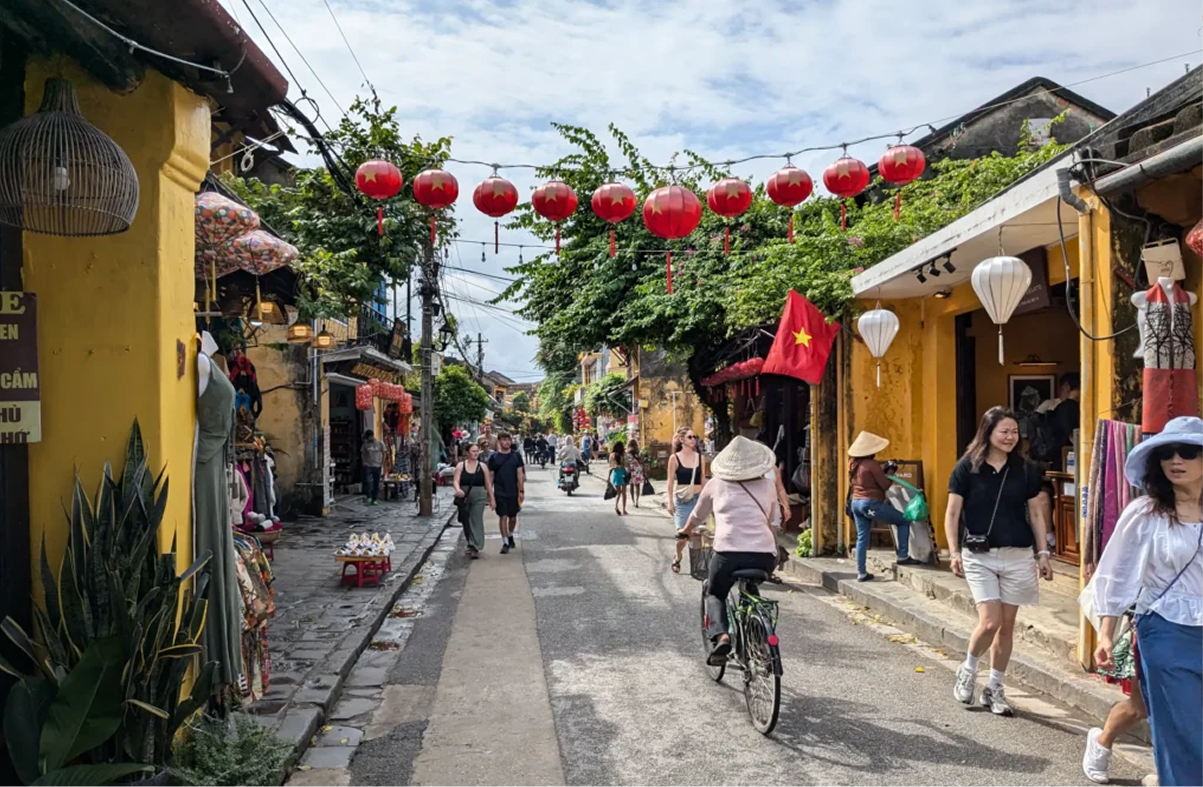
The most magical time to experience Hoi An Vietnam at night is during the full moon festival, held on the 14th day of each lunar month. On this special evening, the ancient town turns off electric lights and glows under thousands of colorful lanterns. Visitors can join the famous “Hoi An Lantern Festival,” release floating lanterns on the river, and admire the dreamy beauty that makes Hoi An one of the most charming destinations in Vietnam. The glowing red lanterns across the old streets create an unforgettable scene and are one of the most iconic symbols of Hoi An Vietnam.

How to get to Hoi An Vietnam
Getting to Hoi An is now easier than ever, with plenty of transportation options suitable for every travel style and budget. Whether you are traveling from Ho Chi Minh City, Hanoi, or nearby provinces, you can conveniently reach this charming ancient town in central Vietnam.
By Airplane
Flying is the quickest and most convenient way to travel to Hoi An. Visitors from Ho Chi Minh City or Hanoi can book flights to Da Nang, then continue the journey to Hoi An by shuttle bus, private car, or taxi. The flight takes around one hour, while ticket prices usually range from 15,2 USD to 60,8 USD per one-way ticket, depending on the season and airline.

By Train
Traveling to Hoi An Vietnam by train is a favorite choice among travelers who enjoy slow travel and beautiful landscapes. Trains from Ho Chi Minh City or Hanoi stop at Da Nang Station or Tra Kieu Station before you continue to Hoi An. The journey typically lasts between 15 and 20 hours, with ticket prices ranging from 8,7 USD to 84,5 USD depending on the seat class and cabin type.

By Sleeper Bus
Long-distance sleeper buses operate daily from Ho Chi Minh City and Hanoi to Hoi An Vietnam. This is one of the most affordable ways to travel, especially for backpackers and budget travelers. Bus tickets usually cost between 12,2 USD and 18,2 USD per trip.

By Motorbike or Private Car
If you love freedom and adventure, traveling to Hoi An by motorbike or private car is an unforgettable experience. This option is especially popular among travelers coming from nearby destinations such as Da Nang or Quang Ngai. The coastal roads and countryside scenery around central Vietnam make the journey just as memorable as the destination itself.

Best ways to get around Hoi An Vietnam
Exploring Hoi An is part of the experience itself. The town is compact, peaceful, and full of charming streets, making it easy to discover at your own pace.
Bicycle
Cycling around the Ancient Town is one of the most authentic experiences in Hoi An Vietnam. Riding through lantern-lit streets, riverside cafés, and quiet alleyways allows visitors to fully enjoy the slow and peaceful atmosphere of the town. Many hotels and homestays provide free bicycles for guests, while rental prices are usually around 1,5 USD per day.
Motorbike
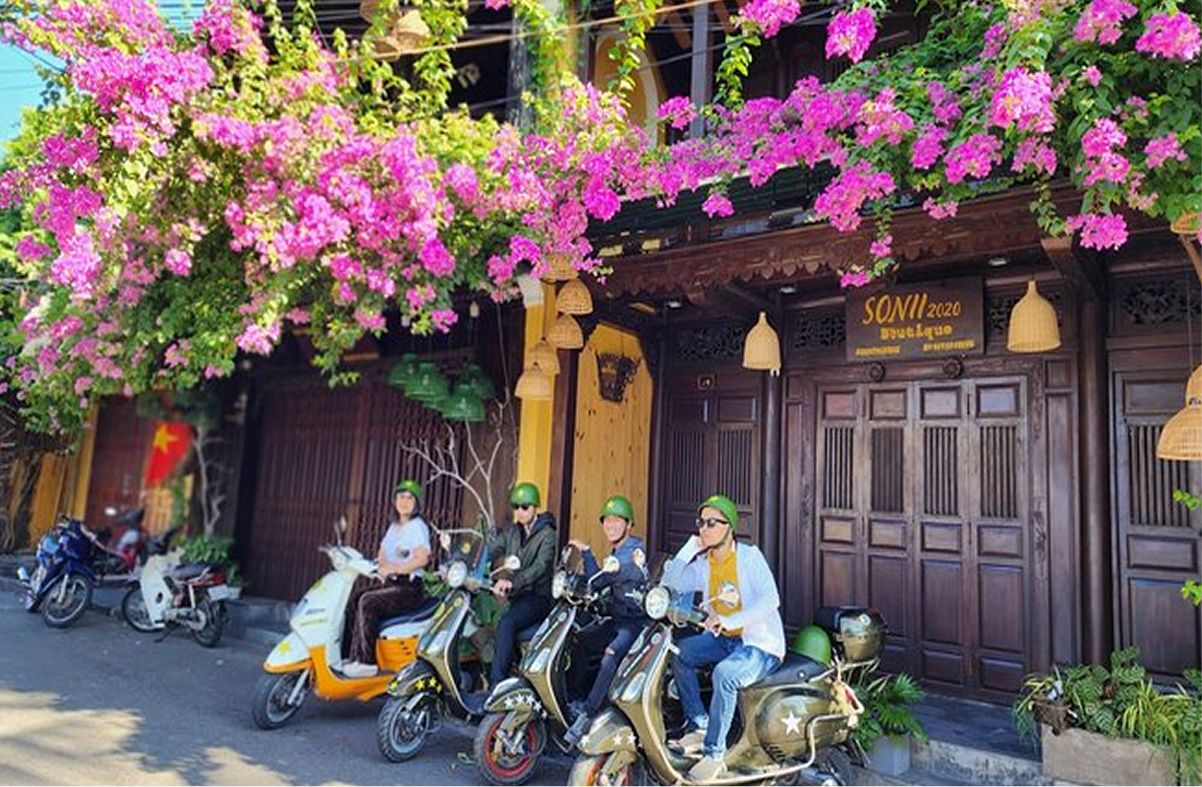
Renting a motorbike is a great option if you plan to visit attractions outside the Ancient Town, including beaches, coconut forests, and countryside villages. Motorbike rental prices in Hoi An typically range from 4,6 USD to 5,7 USD per day.
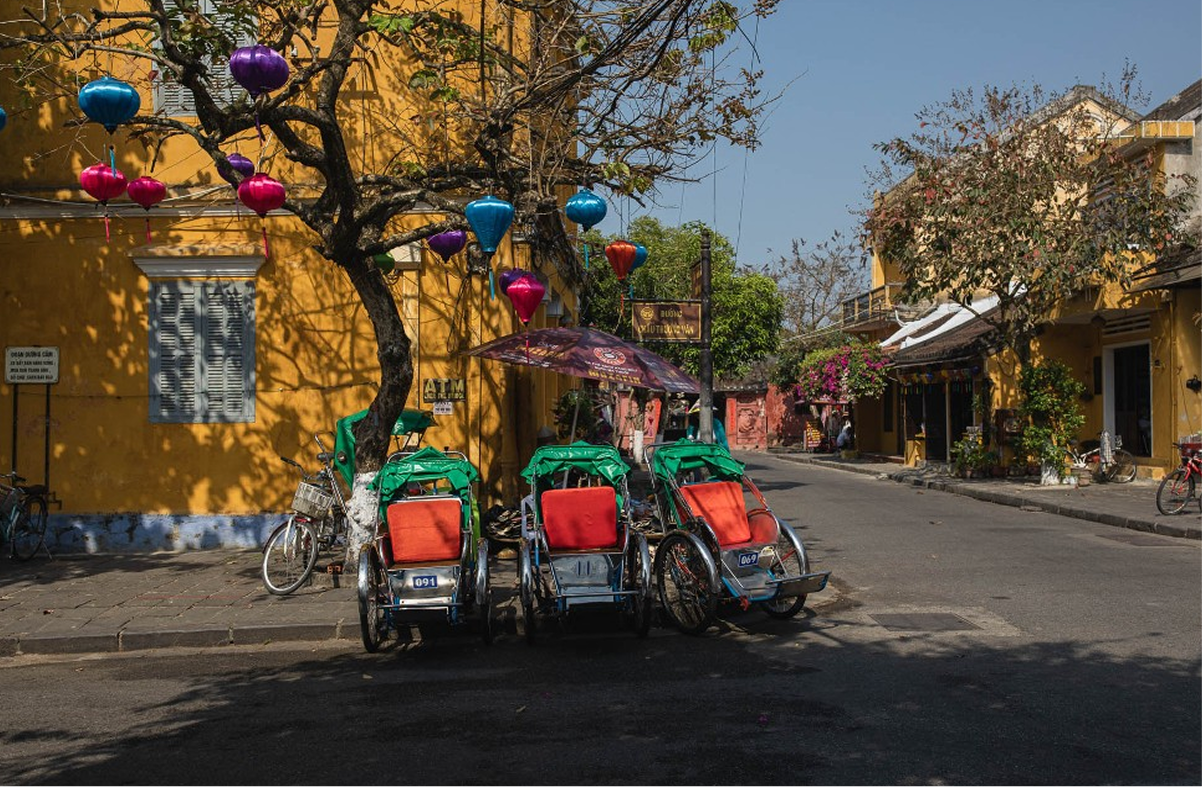
Cyclo
Cyclos are one of the iconic symbols of Hoi An Vietnam and offer a nostalgic way to explore the Old Town. Sitting on a cyclo while slowly passing ancient yellow houses and glowing lanterns feels like stepping back in time. You can easily find cyclos along Phan Chau Trinh Street or Tran Phu Street, with prices averaging around 5,7 USD per hour per ride.
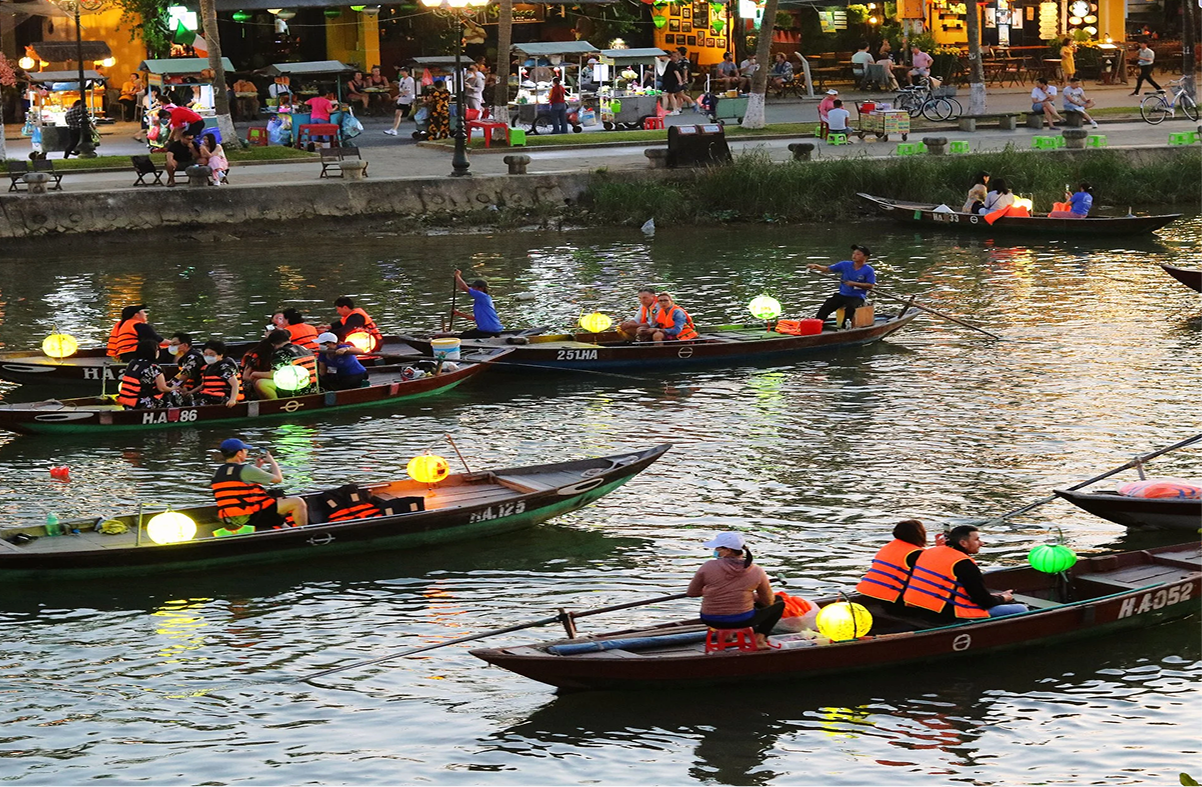
Boat Trips
Taking a boat ride on the Hoai River or Thu Bon River is one of the most memorable activities in Hoi An Vietnam. Visitors can easily hire small boats near the Ancient Town riverfront. On weekdays, a small boat for two people usually costs around 1,9 USD, while during peak travel seasons, a 20-minute boat ride for four people may cost approximately 7,6 USD.
What to prepare before traveling to Hoi An Vietnam
Planning a trip to Hoi An? To make your journey more comfortable and enjoyable, here are some essential things you should prepare before exploring the charming streets of Hoi An Vietnam.
- Prepare personal documents: Before traveling to Hoi An Vietnam, make sure to bring important personal documents such as your ID card, passport, or driver’s license. If you are traveling with children, carrying an original birth certificate or a certified copy is highly recommended for hotel check-ins and transportation procedures.
- Bring basic medicines: For a smoother travel experience in Hoi An Vietnam, it’s a good idea to pack some essential medicines like motion sickness tablets, headache relief, stomach medicine, and any personal medical supplies you may need. These items can be very useful during long journeys or outdoor activities.
- Protect yourself from the sun: The weather in Hoi An Vietnam can be quite sunny, especially during the daytime. Don’t forget to prepare sunglasses, sunscreen, hats, umbrellas, and lightweight long-sleeve clothing to protect yourself from the heat. Comfortable walking shoes or sandals are also recommended since exploring the ancient town usually involves a lot of walking.
- Carry some cash: Although many places in Hoi An Vietnam accept card payments, having some cash on hand is still very convenient for shopping at local markets, enjoying street food, or visiting small cafés and souvenir shops around the ancient town.
- Bring a power bank for photos: Hoi An Vietnam is famous for its lantern-lit streets, riverside views, yellow ancient houses, and beautiful cafés. Since there are countless photo opportunities everywhere, bringing a power bank or an extra phone battery is highly recommended so you can capture every memorable moment without worrying about running out of battery.
Best places to visit in Hoi An Vietnam
Nestled along the central coast of Vietnam, Hoi An is a charming ancient town known for its lantern-lit streets, historic architecture, peaceful riverside scenery, and rich cultural heritage. Whether you are a first-time traveler or returning to explore more hidden gems, Hoi An Vietnam offers countless unforgettable experiences. From ancient houses and traditional assembly halls to stunning beaches and craft villages, here are the top attractions you should not miss in Hoi An Vietnam.
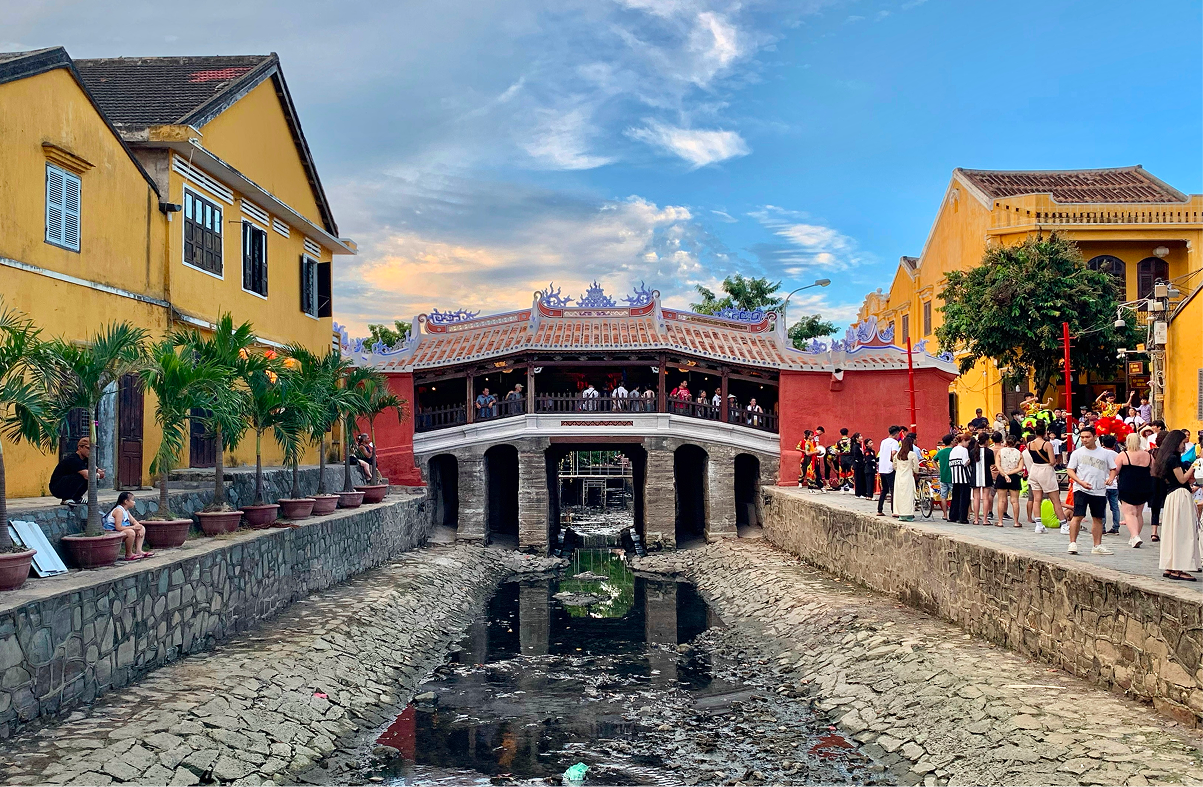
Japanese Covered Bridge
- Location: Nguyen Thi Minh Khai Street, Hoi An Ward, Da Nang City
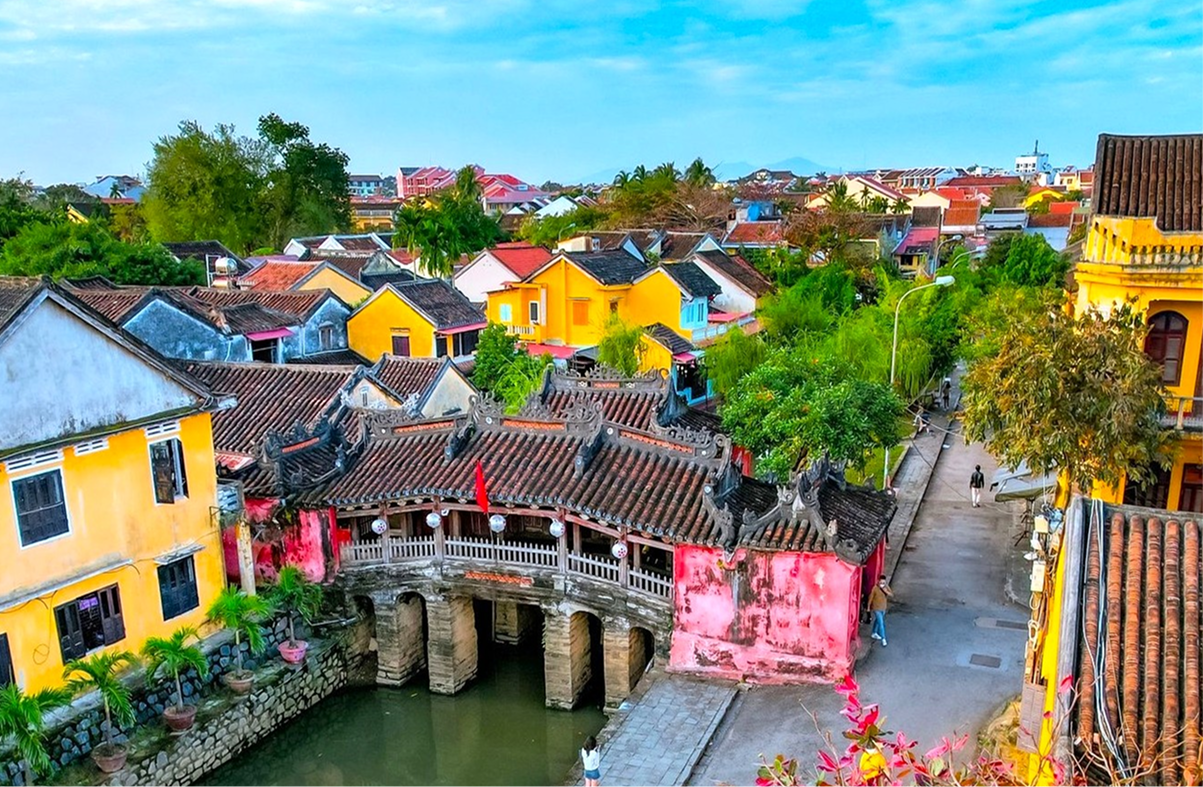
The Japanese Covered Bridge is one of the most iconic landmarks in Hoi An Vietnam. Built in the late 16th century by the Japanese community, this historic bridge beautifully blends Vietnamese, Japanese, Chinese, and Western architectural styles. At the center of the bridge sits a small temple dedicated to the Taoist deity Tran Vo Bac De. Its unique roofed structure and intricate carvings make it a favorite photo spot for visitors exploring the Ancient Town.
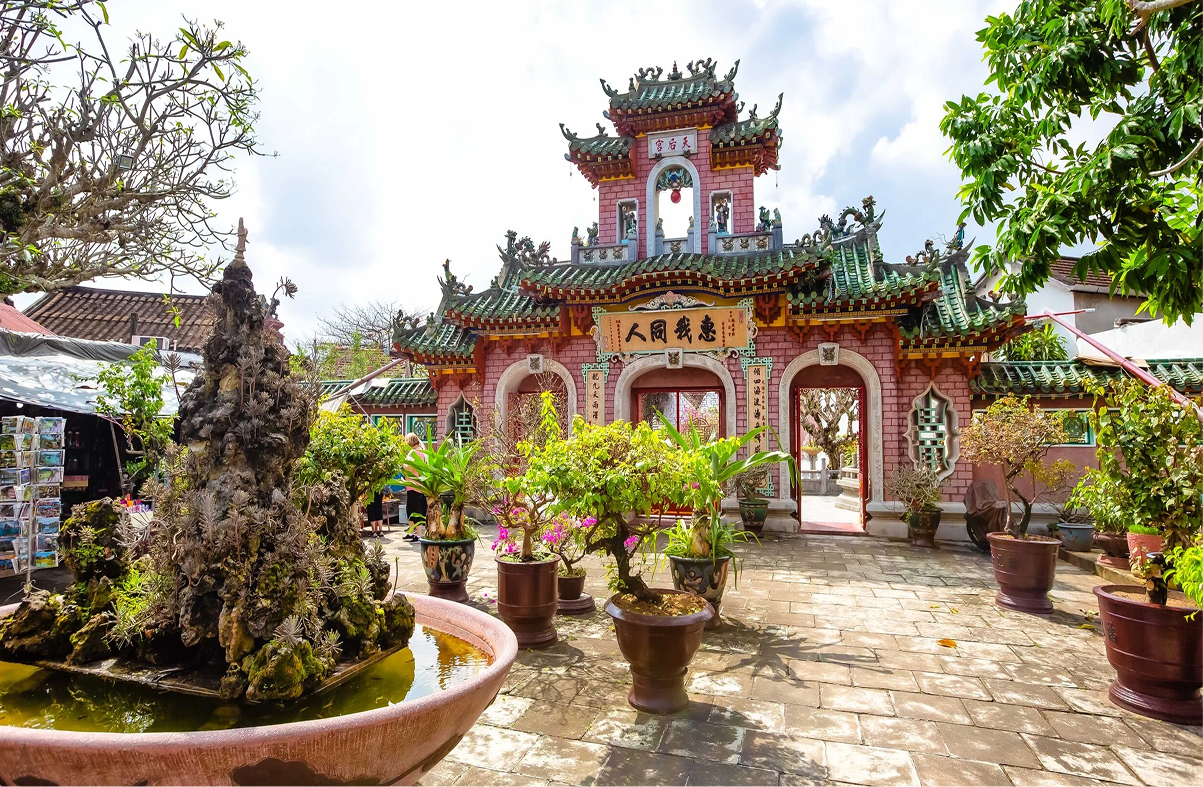
Fujian Assembly Hall
- Location: No. 46 Tran Phu Street, Hoi An Ward, Da Nang City
Fujian Assembly Hall is one of the most impressive Chinese assembly halls in Hoi An Vietnam. Originally built in 1697, the hall was dedicated to Thien Hau Thanh Mau, the sea goddess believed to protect merchants and fishermen. With its vibrant pink gates, dragon statues, and beautifully decorated courtyards, the hall showcases the strong cultural influence of the Chinese community in Hoi An.
Trieu Chau Assembly Hall
- Location: No. 157 Nguyen Duy Hieu Street, Hoi An Dong Ward, Da Nang City.
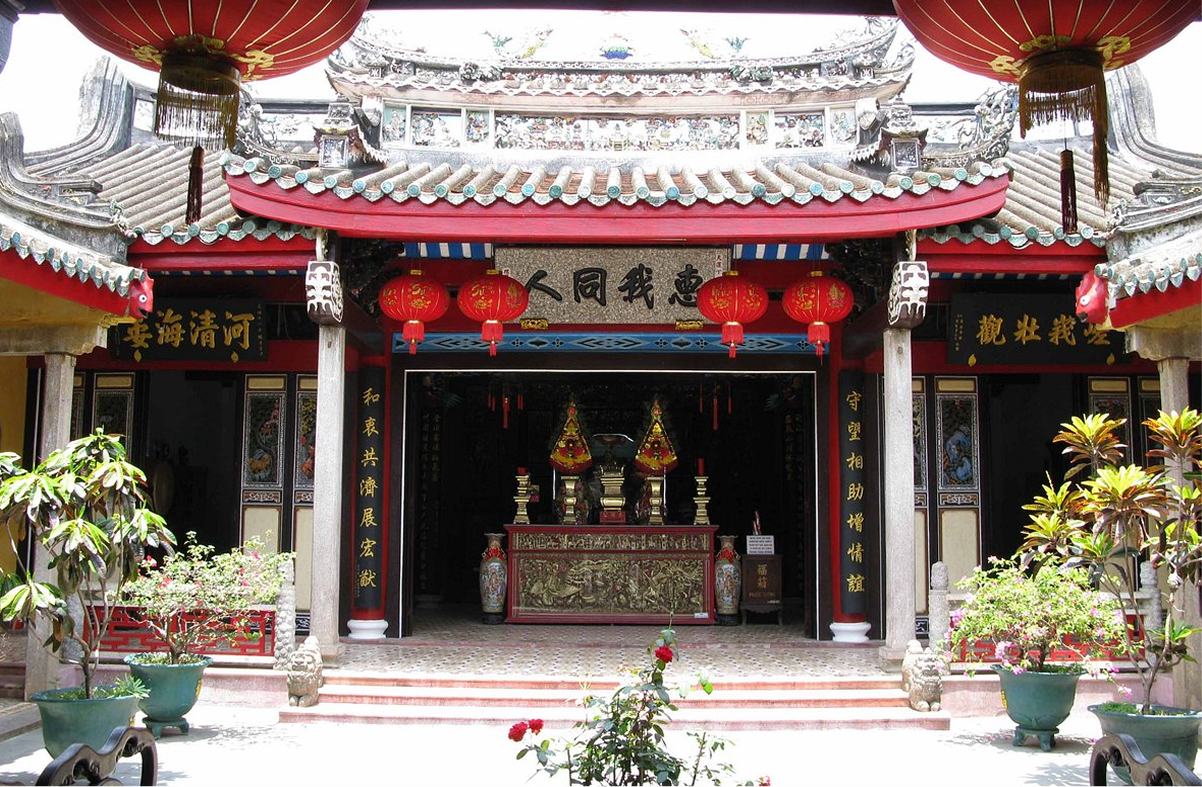
Built in 1845 by the Teochew Chinese community, Trieu Chau Assembly Hall is dedicated to the sea god Phuc Ba General Ma Vien. The assembly hall stands out for its stunning wooden architecture, delicate carvings, and porcelain relief decorations. It remains one of the most culturally significant attractions in Hoi An Vietnam.
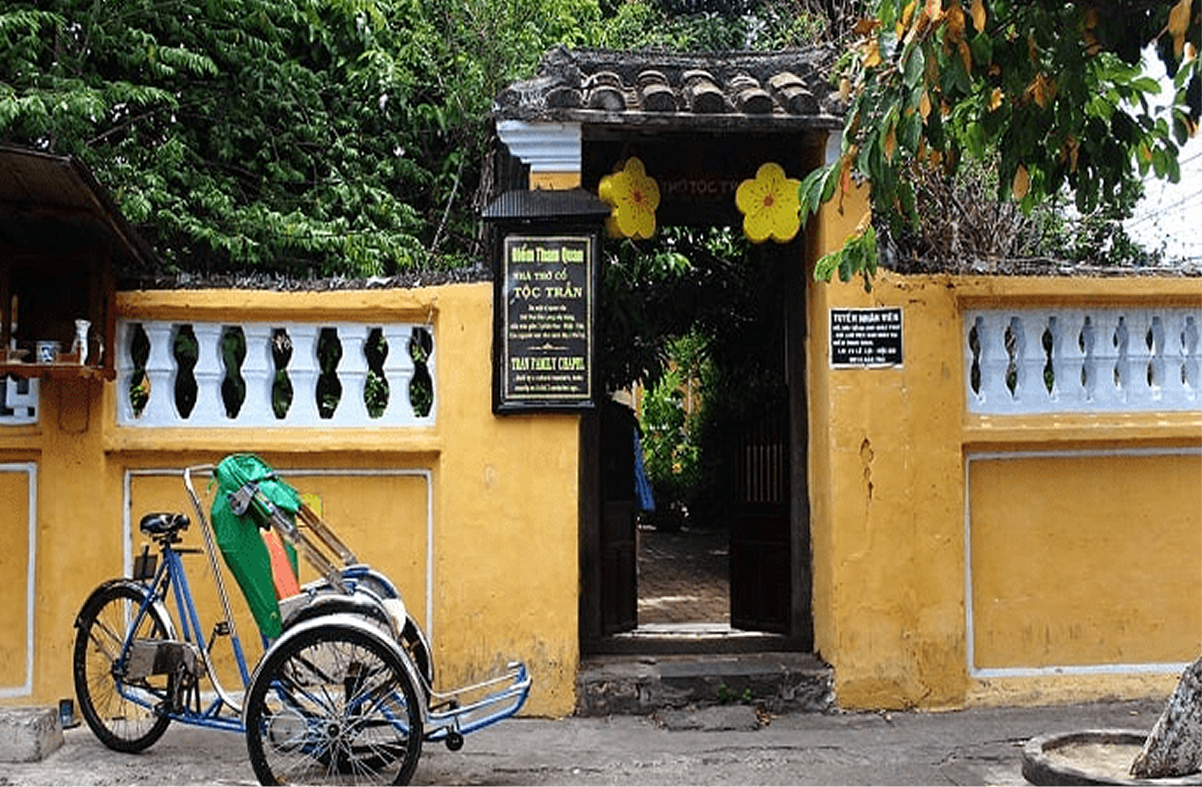
Tran Family Chapel
- Location: No. 21 Le Loi Street, Hoi An Ward, Da Nang City
Tran Family Chapel was built in 1802 by the Tran family, one of the oldest Chinese-descended families in Hoi An. The chapel perfectly reflects traditional Vietnamese and Chinese feng shui principles. Visitors can explore ancestral worship spaces, ancient relics, and traditional wooden houses that have been preserved for centuries.
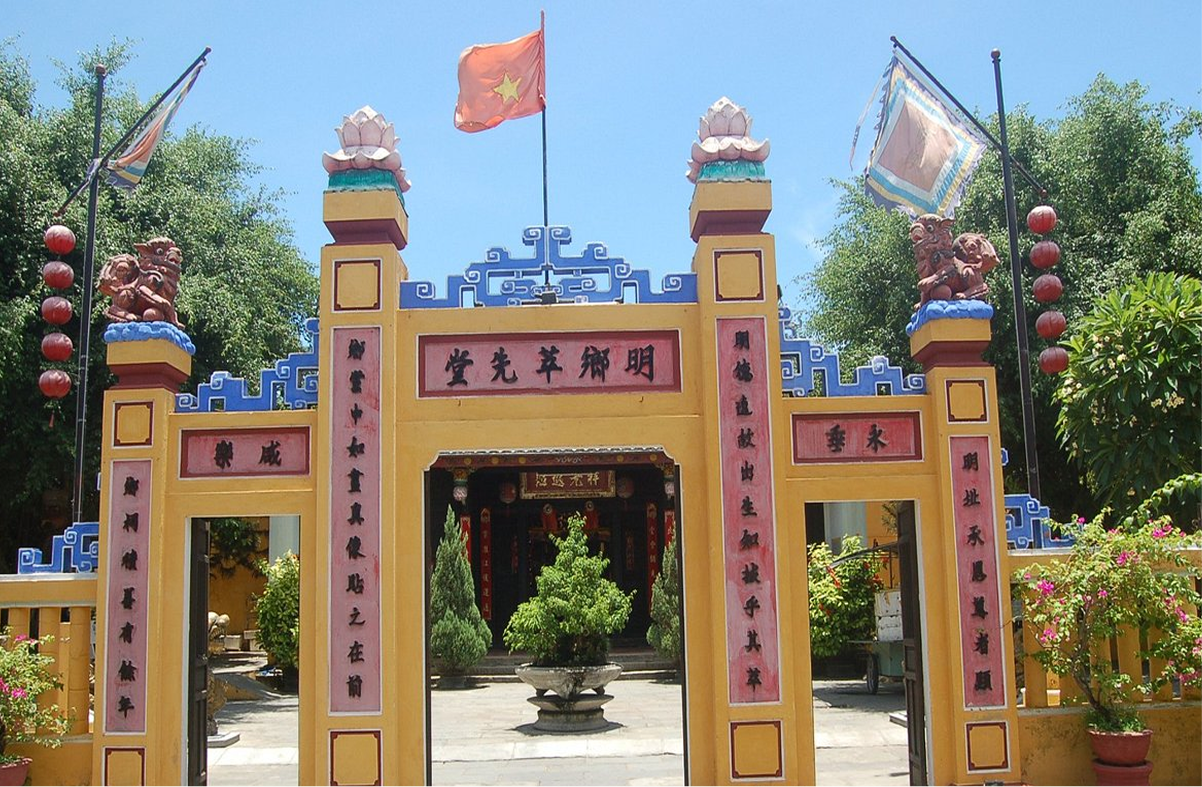
Hoi An Museum of History and Culture
- Location: 10B Tran Hung Dao Street, Hoi An Ward, Da Nang City
For travelers wanting to learn more about the rich heritage of Hoi An Vietnam, Hoi An Museum of History and Culture is a must-visit destination. The museum displays hundreds of artifacts made from ceramics, bronze, wood, and paper, tracing the development of Hoi An from the Sa Huynh culture to the Cham Kingdom and later the Dai Viet era.
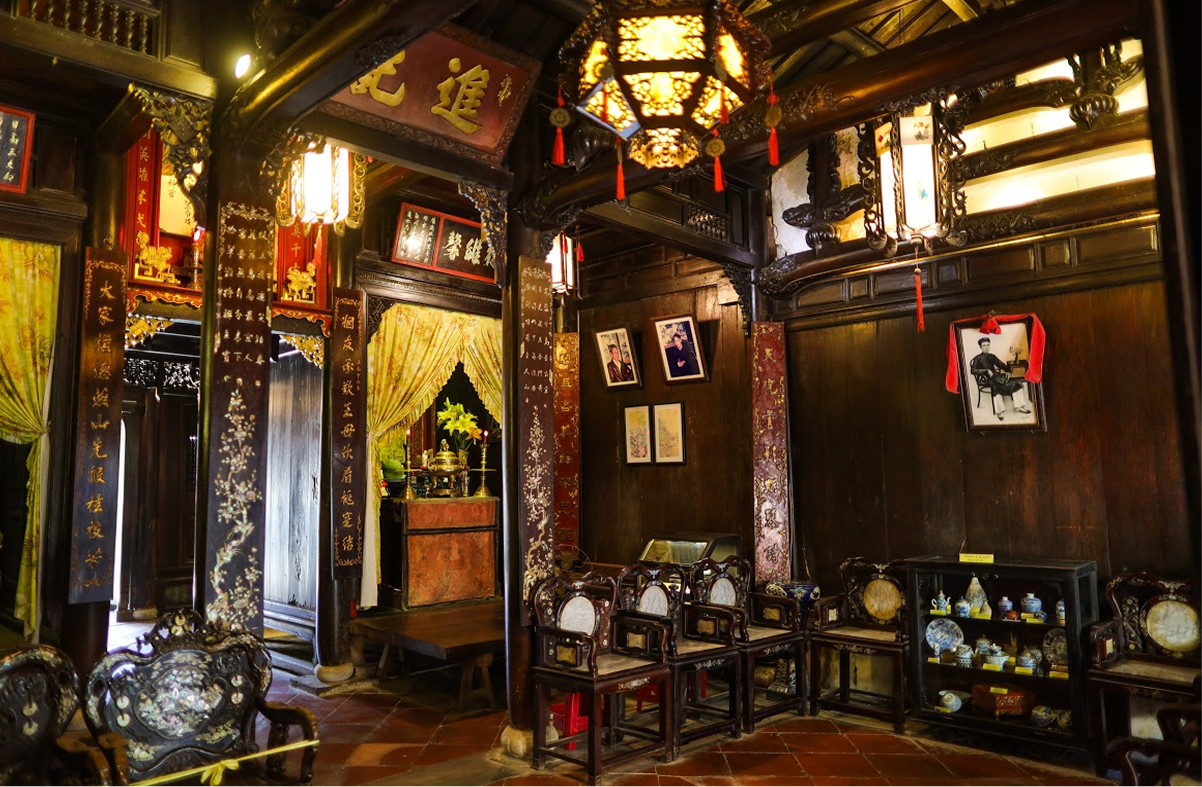
Tan Ky Ancient House
- Location: No. 101 Nguyen Thai Hoc Street, Hoi An Ward, Da Nang City
Tan Ky Ancient House is one of the oldest and most well-preserved houses in Hoi An Vietnam, dating back nearly 200 years. The house once belonged to a wealthy merchant family and features traditional wooden interiors, Japanese architectural influences, and direct river access for trading activities. In 1990, it was recognized as a National Historical and Cultural Heritage site.
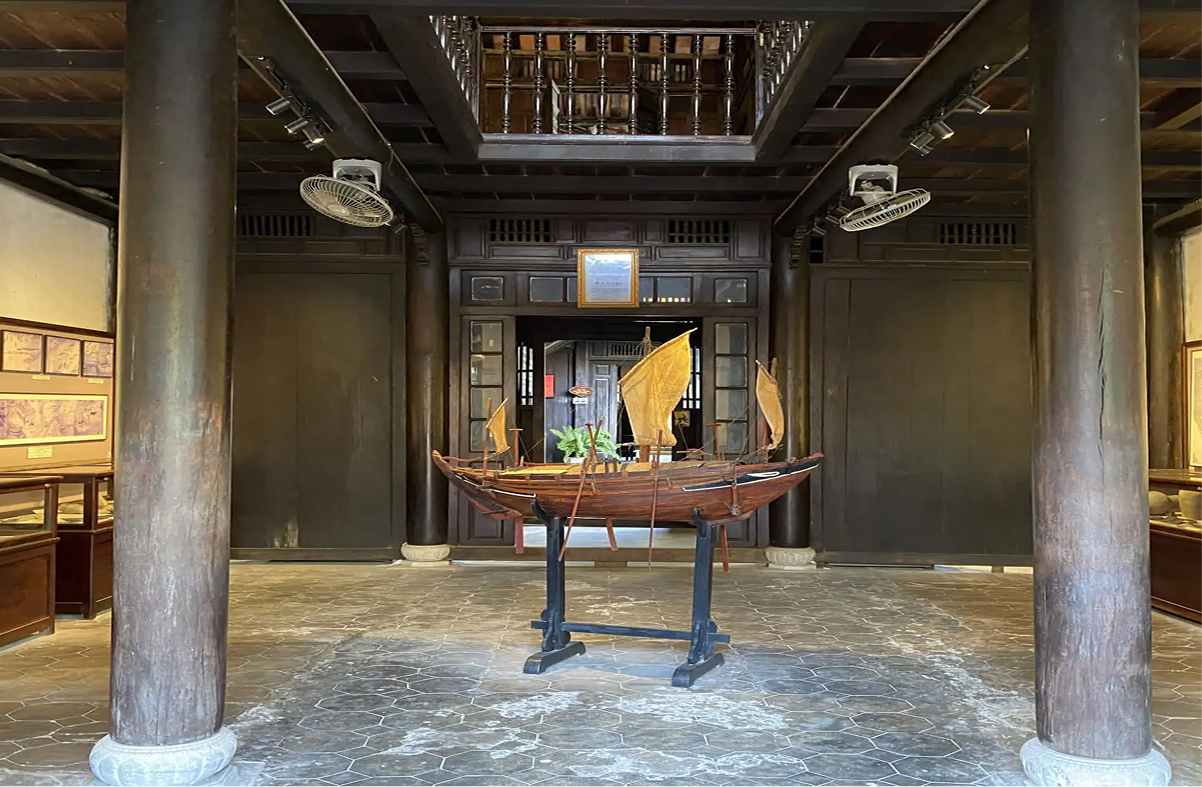
Museum of Trade Ceramics
- Location: 80 Tran Phu Street, Hoi An Ward, Da Nang City
Museum of Trade Ceramics preserves valuable ceramic artifacts dating from the 9th to the 19th century. The museum reflects the important role of Hoi An Vietnam as a major trading port on the maritime silk route. Visitors can admire ancient ceramics from Vietnam, China, and other Asian countries, including artifacts recovered from shipwrecks near Cu Lao Cham Island.
Must-try local dishes in the ancient town
When travelers think about Hoi An, lantern-lit streets and yellow ancient houses often come to mind first. But beyond the charming old town, the culinary scene of Hoi An Vietnam is what truly captures the hearts of visitors. Influenced by Vietnamese, Chinese, and Japanese cultures, Hoi An’s cuisine offers flavors that are both authentic and unforgettable.
Hoi An chicken rice
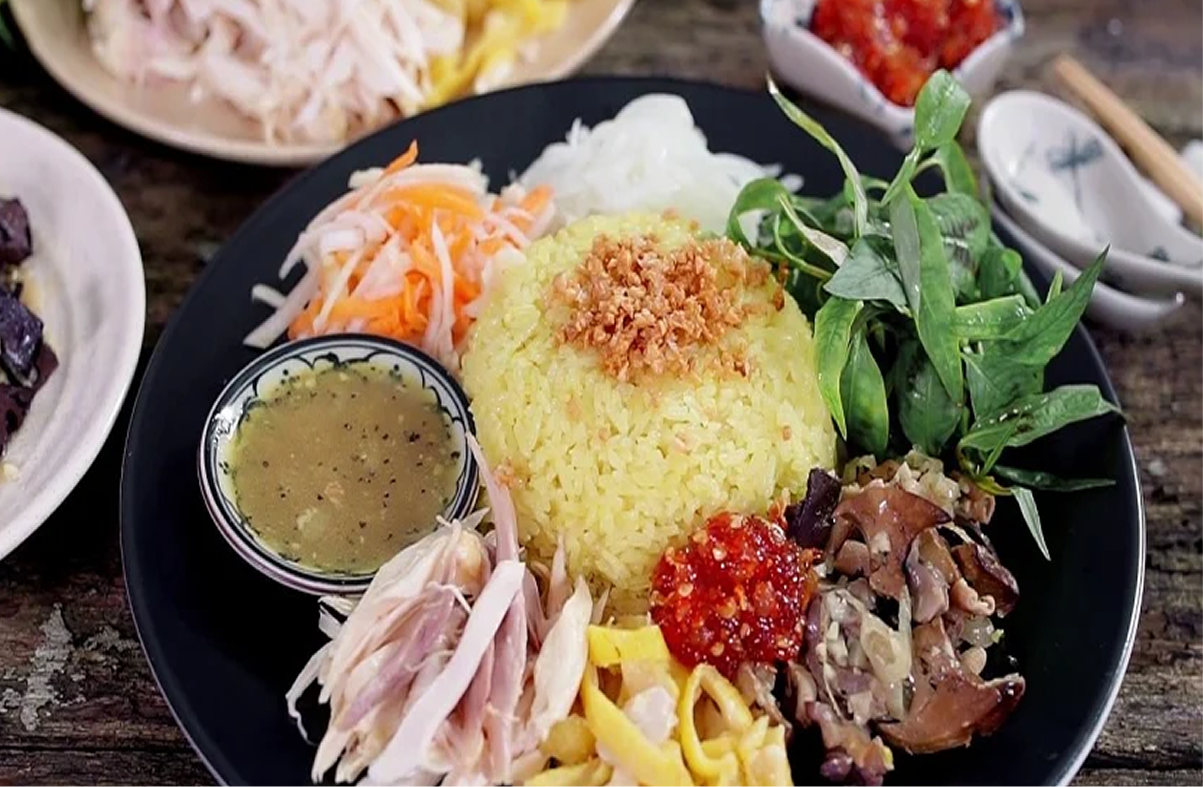
Chicken rice is one of the most iconic dishes in Hoi An Vietnam. Among the many local eateries, Ba Thuan Chicken Rice is a favorite for food lovers who enjoy rich and flavorful chicken dishes. The chicken is tender, juicy, and naturally sweet, made from carefully selected young hens cooked to perfection. The rice is fragrant, cooked with chicken broth, and served alongside a small bowl of soup with chicken liver and blood pudding, a traditional local touch. For travelers looking to experience authentic local food in Hoi An Vietnam, this is a dish you should not miss.
Cao Lau
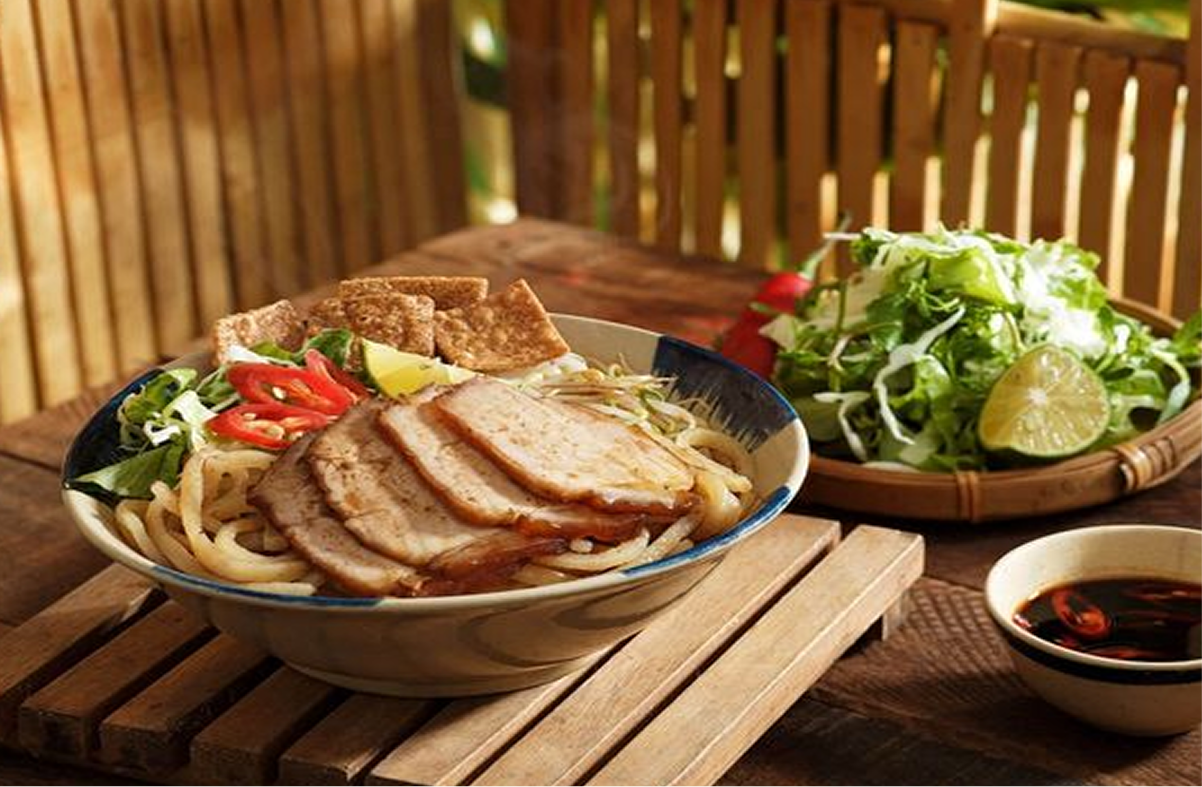
No food journey in Hoi An Vietnam is complete without trying Cao Lau. Locals believe this famous noodle dish dates back to the 17th century, reflecting the cultural exchange between Vietnamese, Chinese, and Japanese communities in the ancient trading port. Cao Lau features chewy noodles, slices of char siu-style pork, fresh herbs, crispy croutons, and a small amount of rich broth. What makes it truly unique is that authentic Cao Lau can only be found in Hoi An Vietnam due to its special preparation methods and local ingredients.
White Rose Dumplings
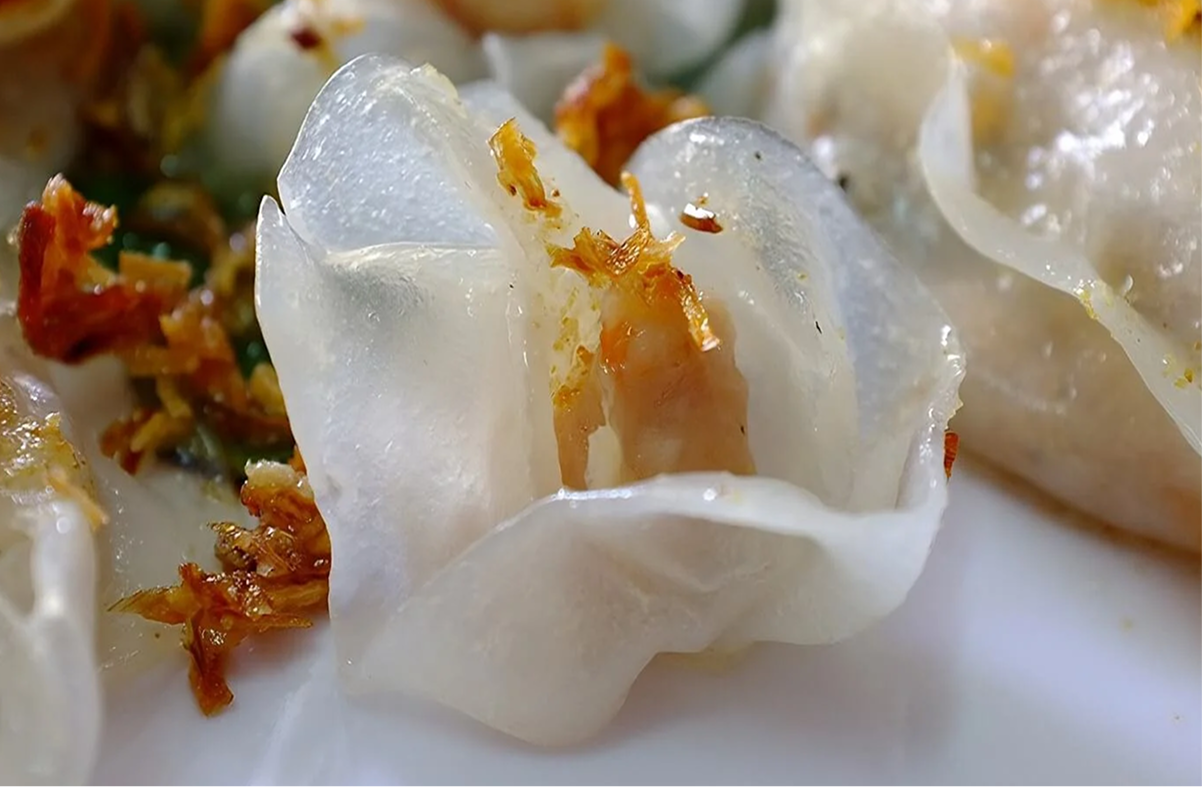
Known locally as “Banh Bao – Banh Vac,” White Rose Dumplings are among the most elegant dishes in Hoi An Vietnam. The translucent rice dough wraps around savory fillings made from shrimp or pork, seasoned with secret local spices. Soft, light, and beautifully handcrafted, these dumplings are often considered a symbol of Hoi An’s refined culinary culture.
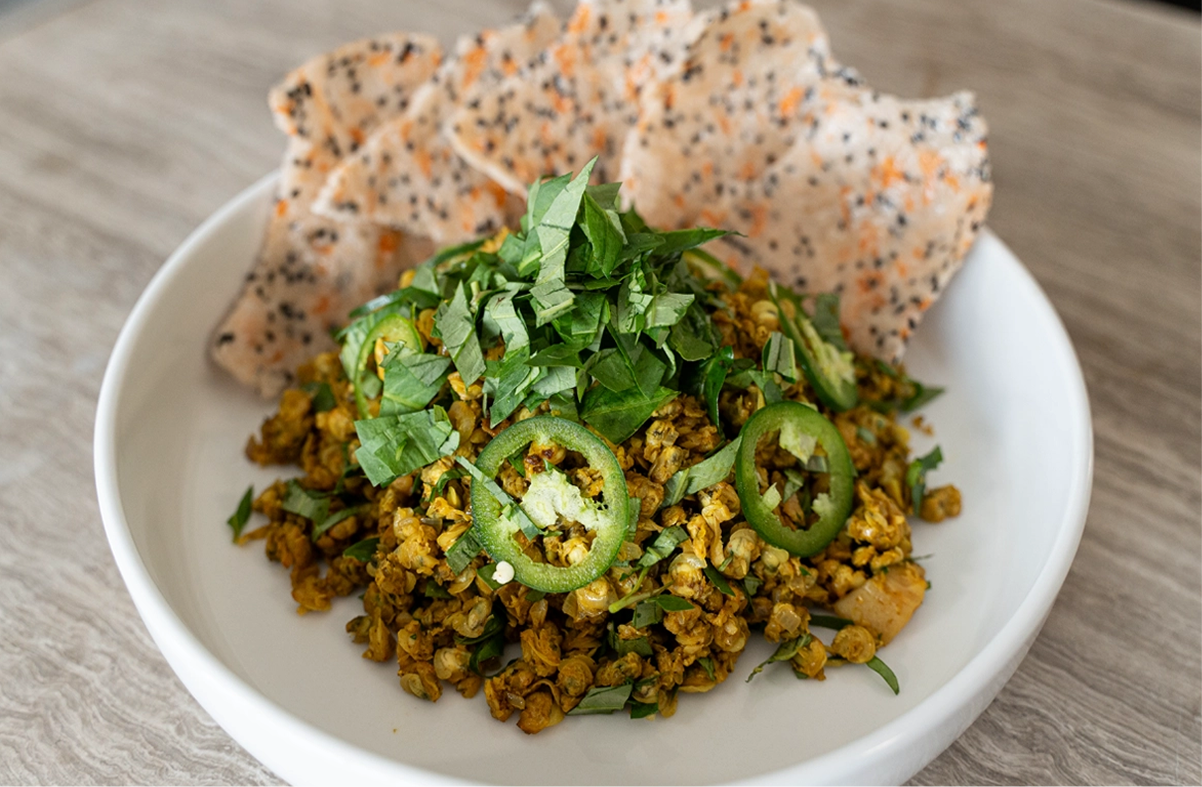
Banh Dap and Stir-Fried Baby Clams
If you want to eat like a local in Hoi An Vietnam, try Banh Dap with stir-fried baby clams. The dish combines crispy rice crackers with soft steamed rice paper, served together with flavorful clams sautéed with herbs and spices. The contrast of textures makes this street food snack incredibly addictive.
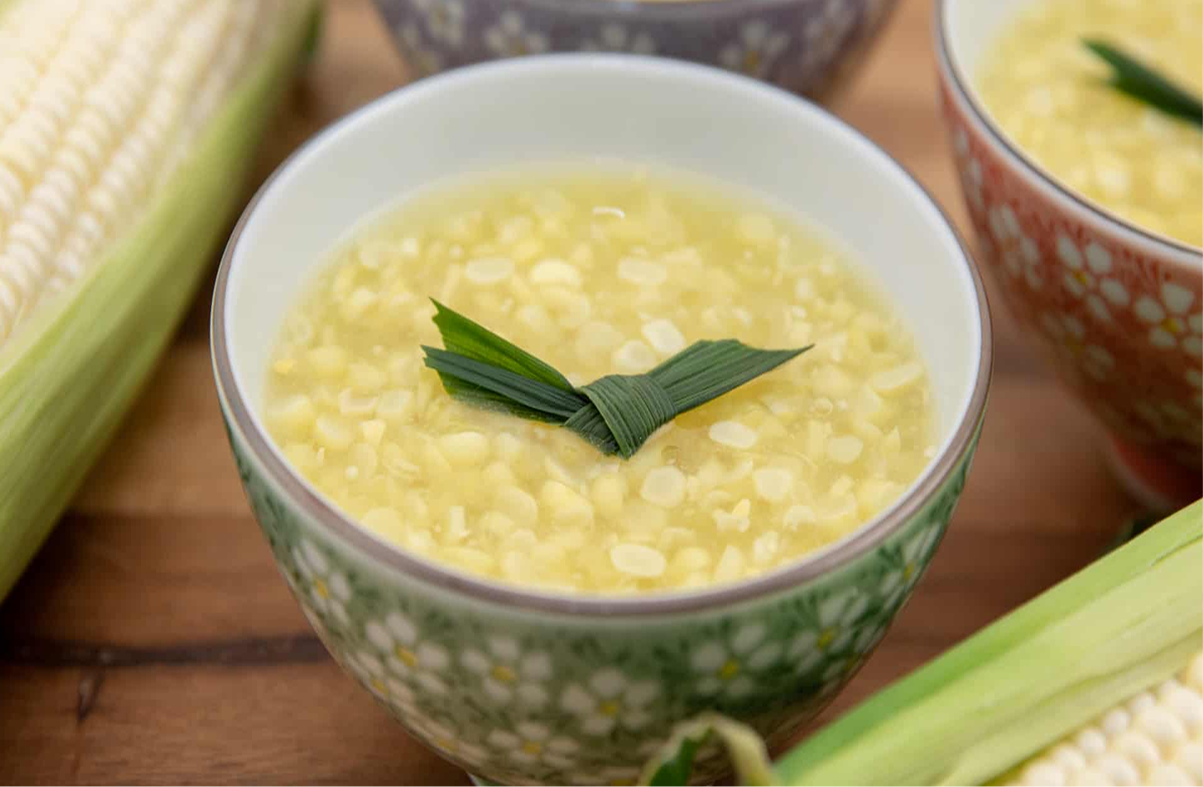
Sweet Corn Dessert
Sweet corn dessert, known as “Che Bap,” is one of the most beloved traditional desserts in Hoi An Vietnam. Made from fresh Cam Nam corn, the dessert has a naturally sweet and delicate flavor. Unlike many southern Vietnamese sweet soups, Hoi An’s version keeps the original corn flavor intact and only adds a small amount of coconut cream when served. The best season to enjoy this dessert is from March to September when the local corn harvest reaches its peak.
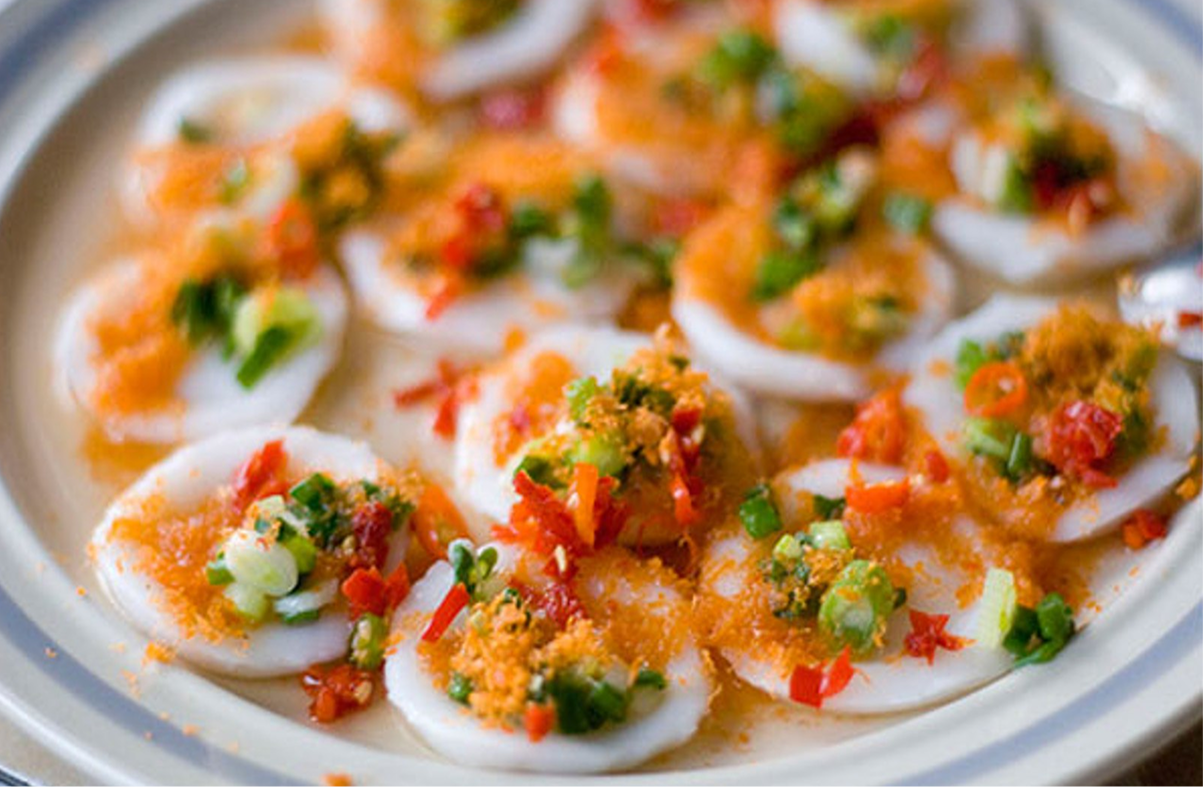
Hoi An Water Fern Cakes
Banh Beo is another traditional delicacy that represents the culinary identity of Hoi An Vietnam. These small steamed rice cakes are topped with shrimp, pork, scallion oil, and chili sauce. One of the most interesting parts of eating water fern cakes is using a small bamboo knife to lift each cake from its tiny dish, a unique local dining experience visitors often remember.
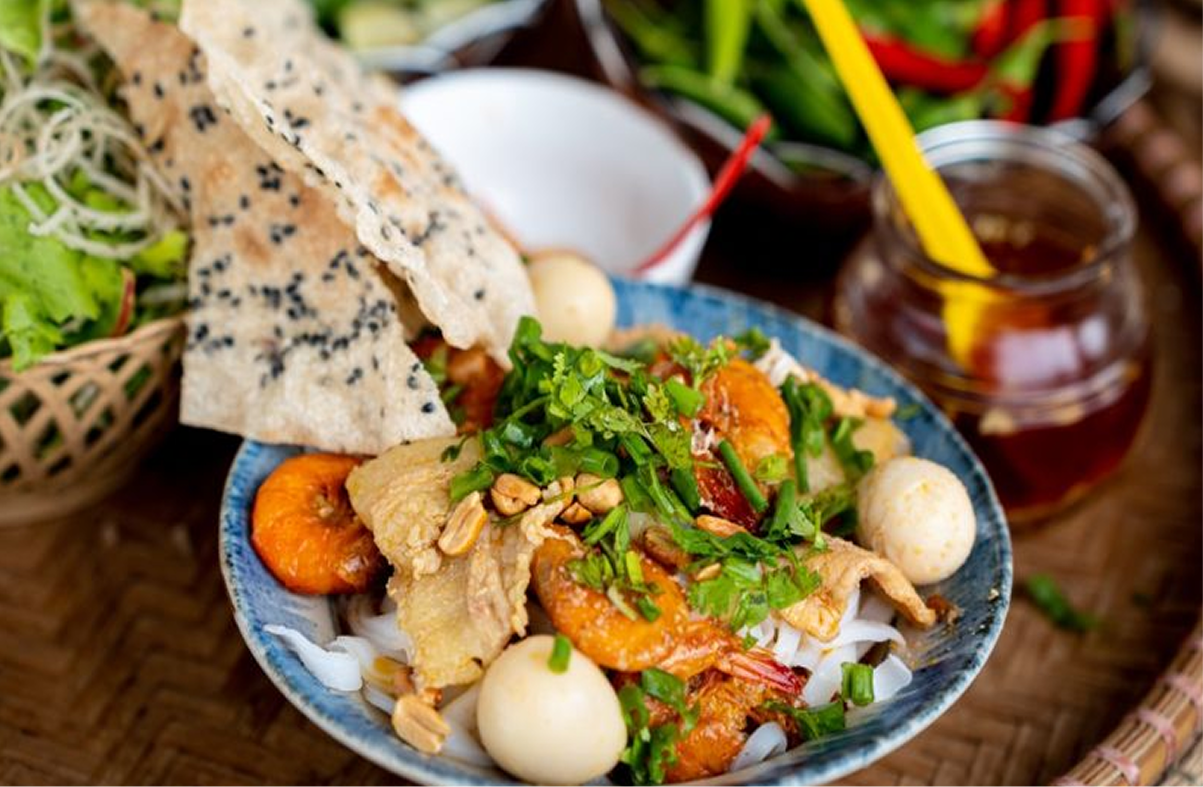
Mi Quang
Mi Quang may look similar to Cao Lau at first glance, but the flavor is completely different. This famous noodle dish from central Vietnam is commonly served with shrimp, pork, quail eggs, roasted peanuts, and fresh herbs. In Hoi An Vietnam, locals often enjoy Mi Quang with crispy sesame rice crackers on the side for extra crunch.
FAQs – Frequently Asked Question about Hoi An Vietnam
Where is Hoi An Vietnam located?
Hoi An is located in central Vietnam, about 30 kilometers southeast of Da Nang. The ancient town sits along the Thu Bon River and is famous for its lantern-lit streets, historic architecture, and peaceful atmosphere.
What is the best time to visit Hoi An Vietnam?
The best time to visit Hoi An Vietnam is from February to April when the weather is cool, dry, and comfortable for sightseeing, cycling, and exploring the ancient town.
Why is Hoi An Vietnam famous?
Hoi An Vietnam is famous for its UNESCO-listed Ancient Town, colorful lanterns, historic houses, traditional assembly halls, local cuisine, and unique blend of Vietnamese, Chinese, Japanese, and European cultural influences.
Is Hoi An Vietnam worth visiting?
Yes, Hoi An Vietnam is considered one of the most beautiful and charming destinations in Vietnam thanks to its rich history, peaceful riverside scenery, cultural heritage, local food, and relaxing atmosphere.
How many days should I spend in Hoi An Vietnam?
Most travelers recommend spending 2 to 4 days in Hoi An Vietnam to fully explore the Ancient Town, nearby beaches, local villages, night markets, and traditional food culture.
Conclusion
Hopefully, the travel tips and experiences shared above will help you better prepare for your journey to Hoi An. From wandering through lantern-lit streets to discovering local food, culture, and hidden corners, Hoi An Vietnam promises unforgettable moments for every traveler.
If you’re planning your next adventure to Hoi An Vietnam, let Vietnam Asia Travel DMC accompany you with local insights, flexible travel services, and authentic experiences that make your trip even more memorable. Start your Hoi An journey today and create your own beautiful story in one of Vietnam’s most charming destinations.